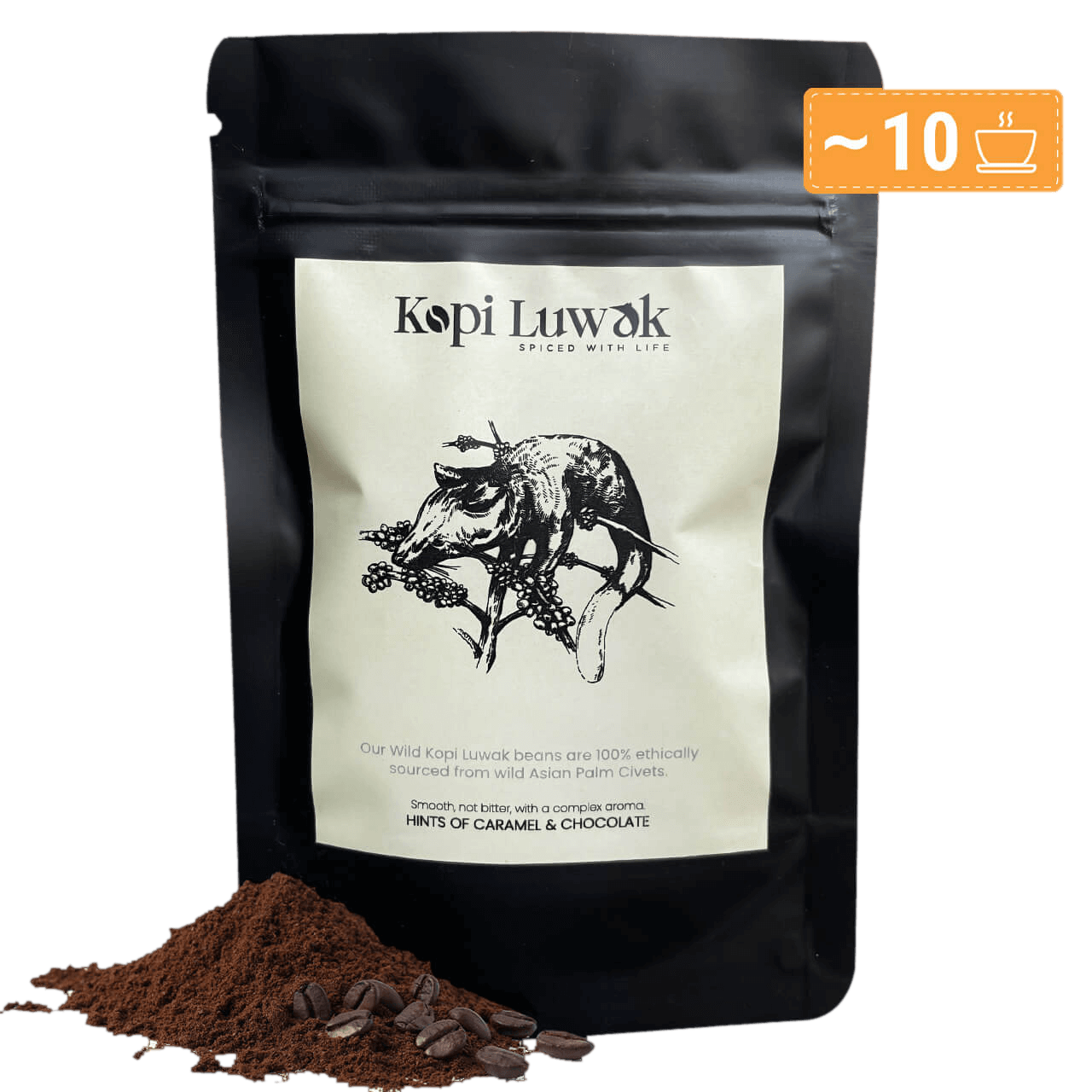
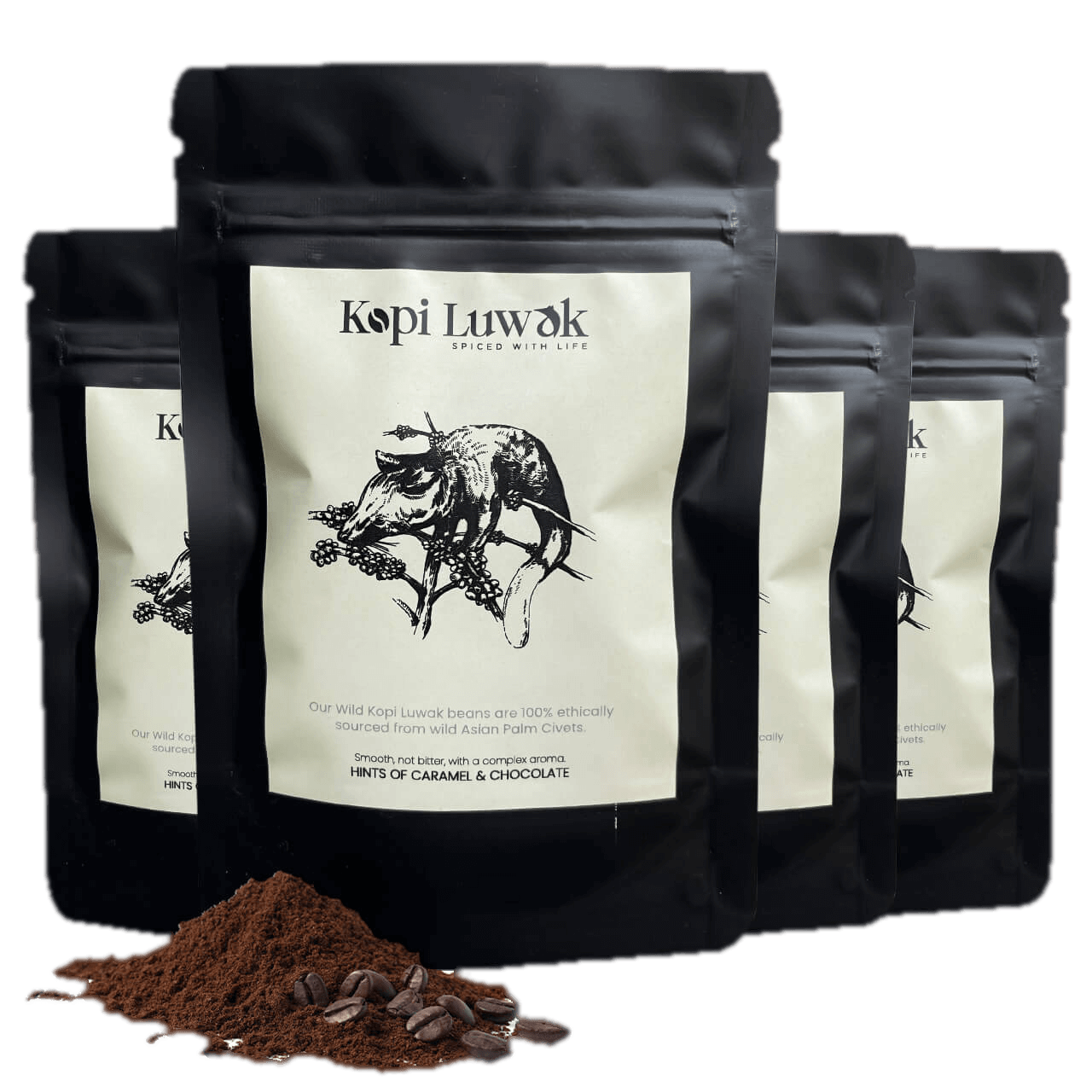
The rarest coffee on earth,chosen by a wild civet in the forests of Sumatra Kopiluwak 50 The taster · ≈ 10 cups Kopiluwak 200 The collector · ≈ 40 cups
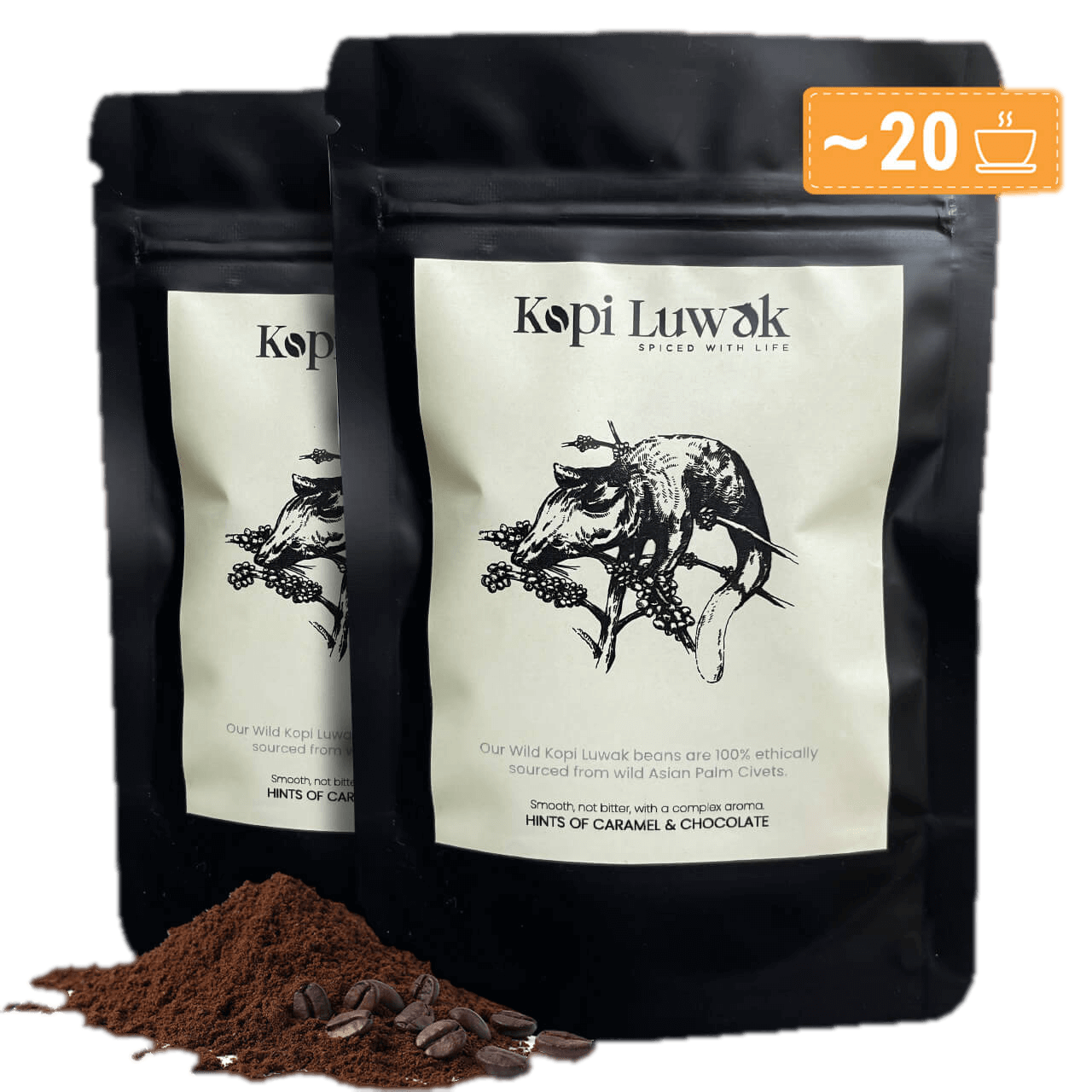
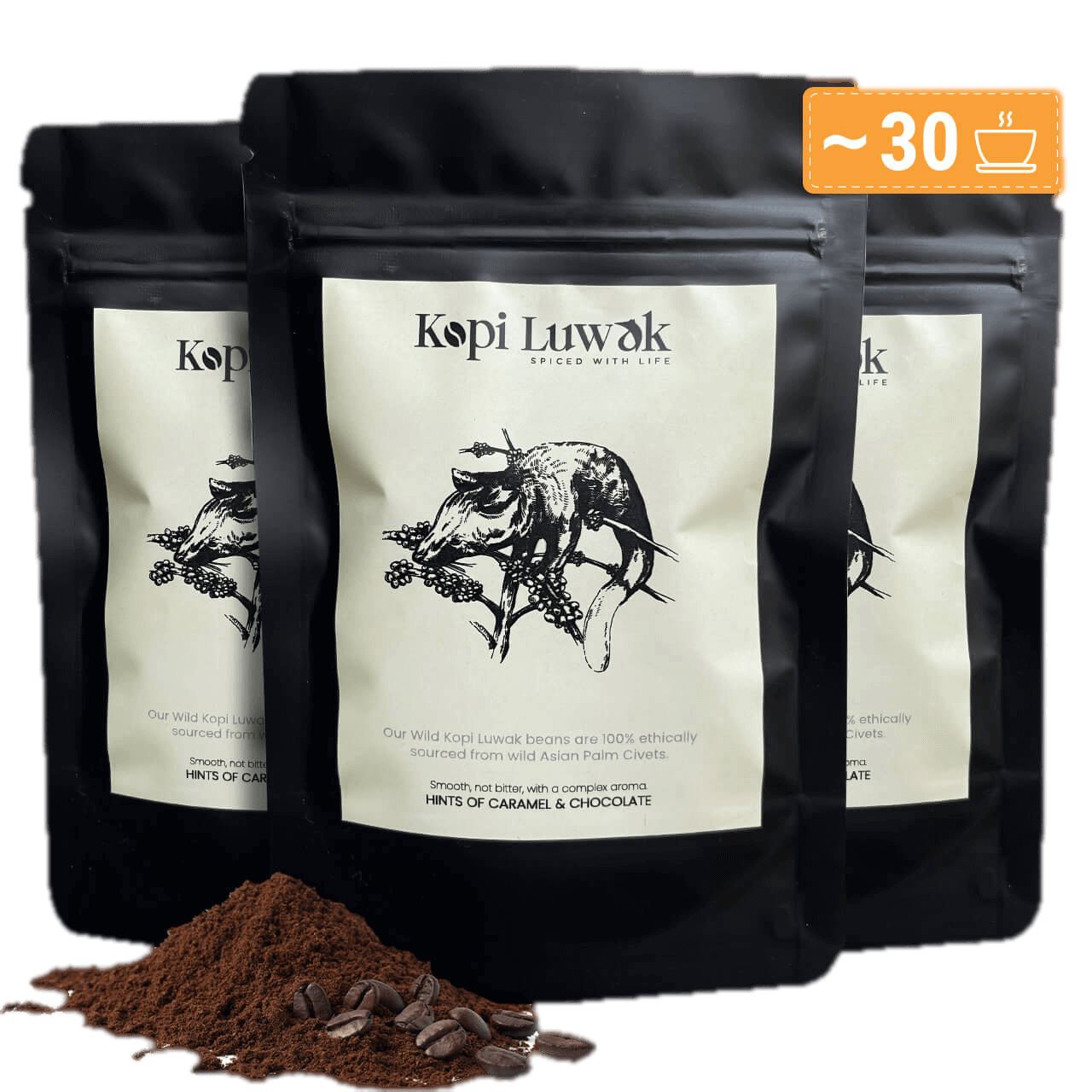
Kopiluwak 100 The ritual · ≈ 20 cups Kopiluwak 150 The connoisseur · ≈ 30 cups
Kopiluwak 50 Kopiluwak 100 Kopiluwak 150 Kopiluwak 200
01 01 · The forest
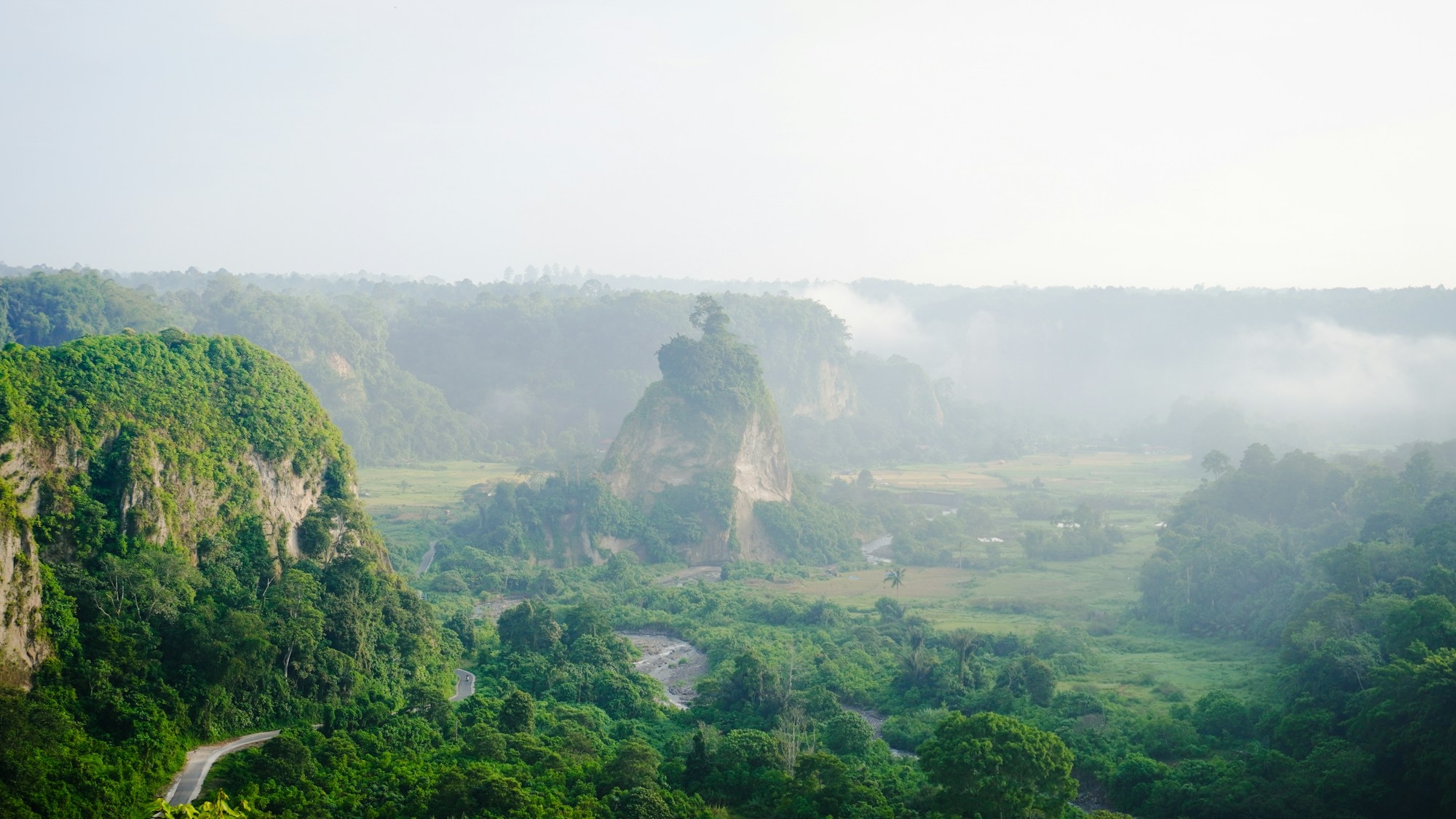
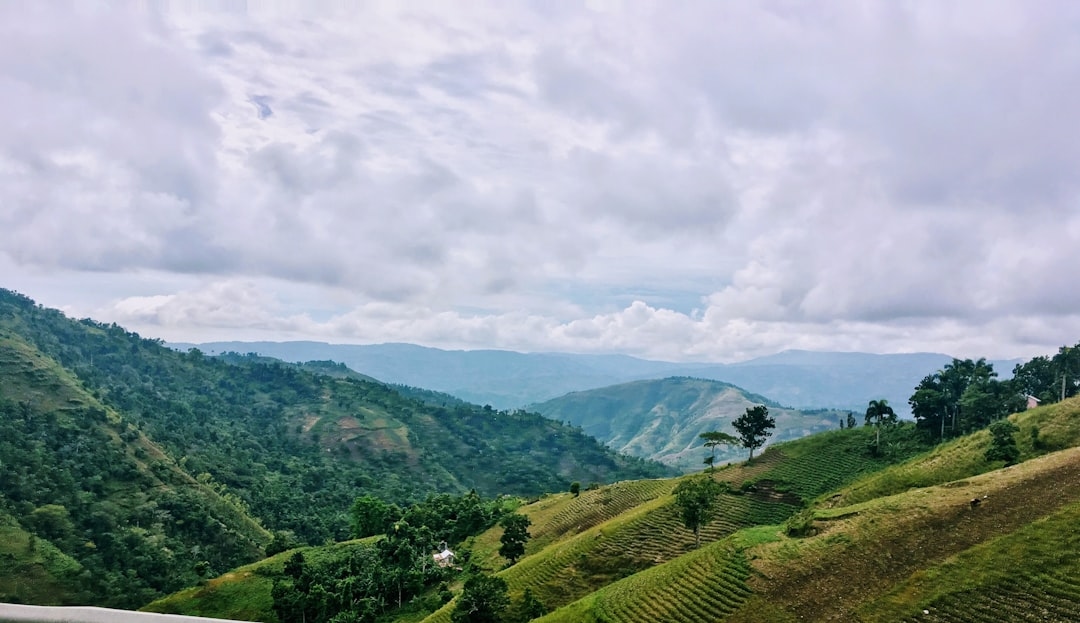
It begins in the highlands of Sumatra Cool air, volcanic soil and morning mist. Arabica coffee trees grow here among the forest, far from any plantation rows.
Nothing is planted for the civet and nothing is fenced. The forest is simply left to be a forest.
02 02 · The cherry
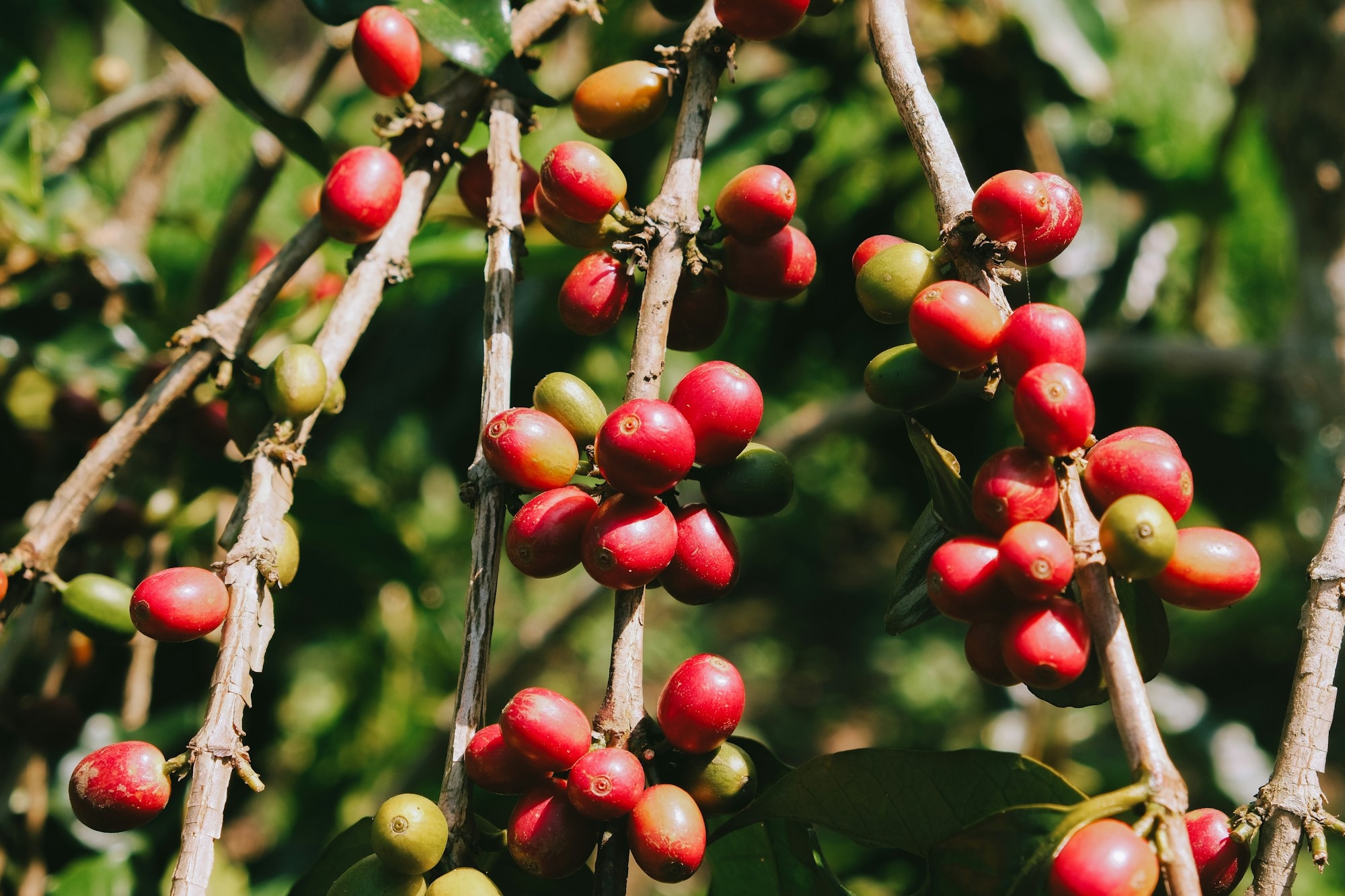
The fruit ripens slowly Coffee starts as a cherry. On the same branch some are green, some orange and only a few deep red.
Those few red ones are at their sweetest. They are the only ones that matter for what comes next.
03 03 · The civet
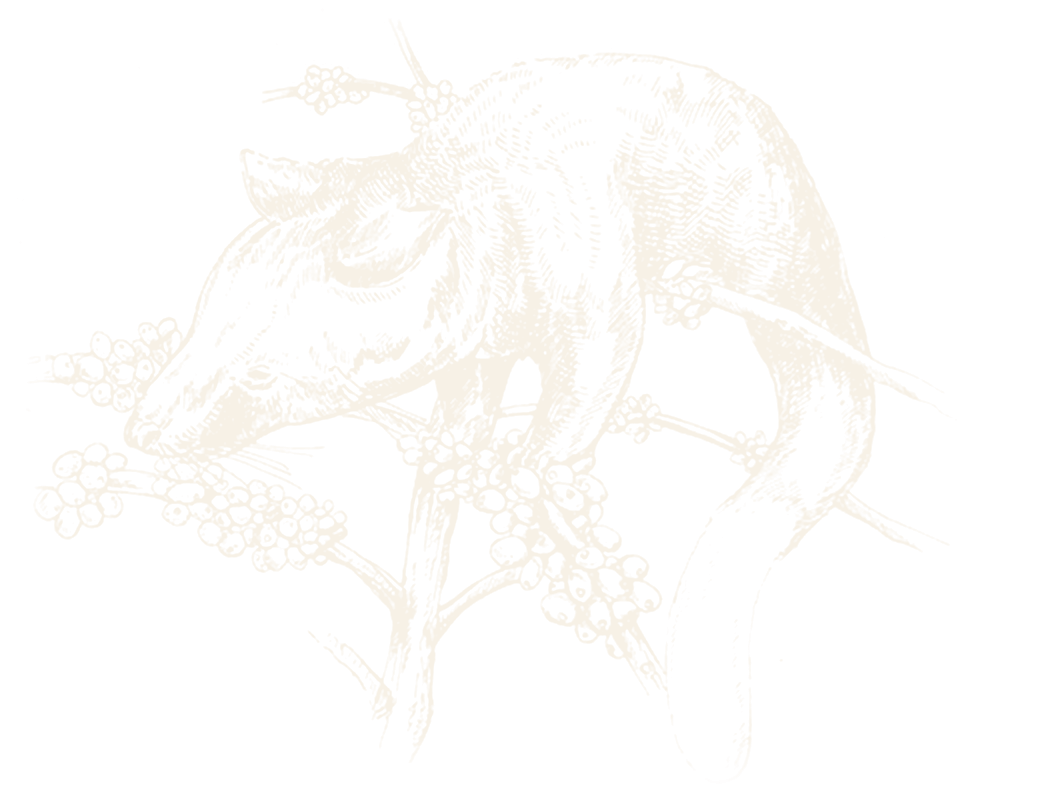
A wild connoisseur chooses At night the Asian palm civet climbs through the trees. It is a picky eater and takes only the ripest, sweetest cherries.
This is the civet on our pack. It lives free in the forest and is never caged.
04 04 · Nature's work
Fermented from the inside The civet digests the fruit but not the bean. Along the way, its natural enzymes break down the proteins that make coffee bitter.
No machine or recipe has managed to copy this step. It is why Kopi Luwak tastes the way it does.
05 05 · The gathering
Collected by hand at first light At dawn, local farmers walk the forest floor and gather the beans the civets have left behind, one small find at a time.
It is slow work, and it is the reason only a few hundred kilograms of wild Kopi Luwak exist each year.
06 06 · Washed and dried
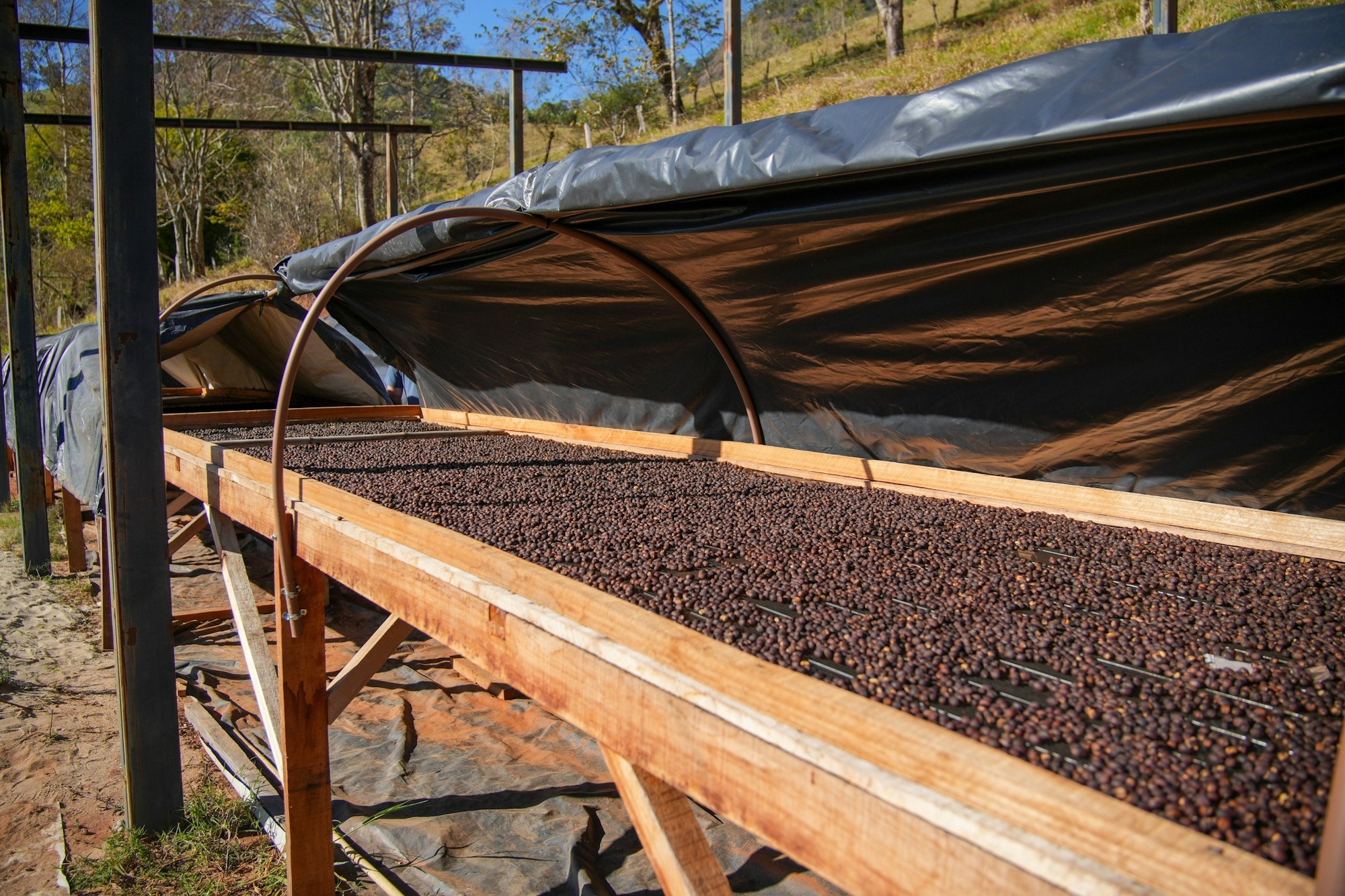
Cleaned, then left to the sun The beans are washed thoroughly, several times, and their outer layers are removed. Then they are spread out to dry slowly in the sun.
What remains is a clean, pale green coffee bean, ready for the roaster.
07 07 · The roast
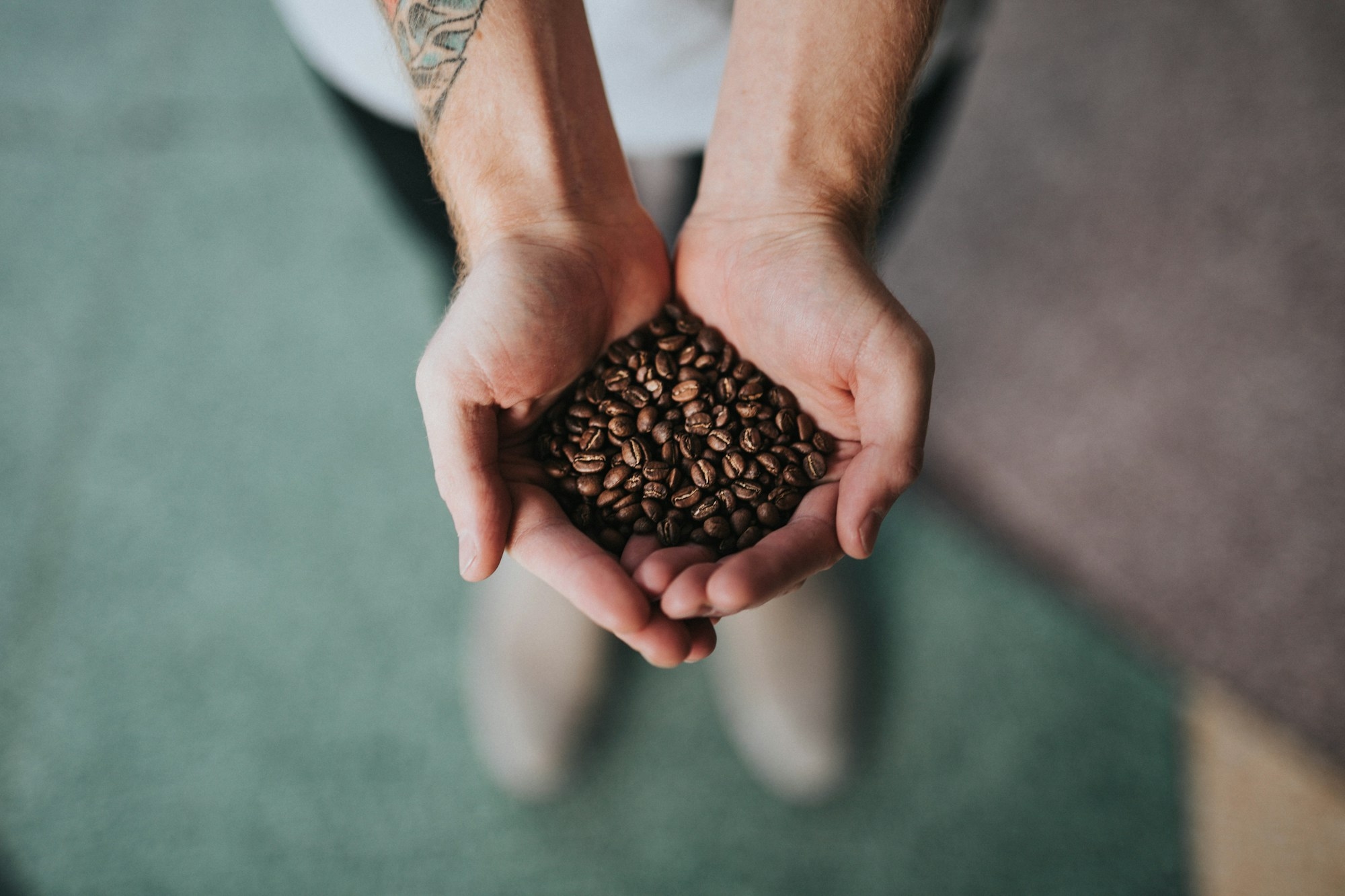
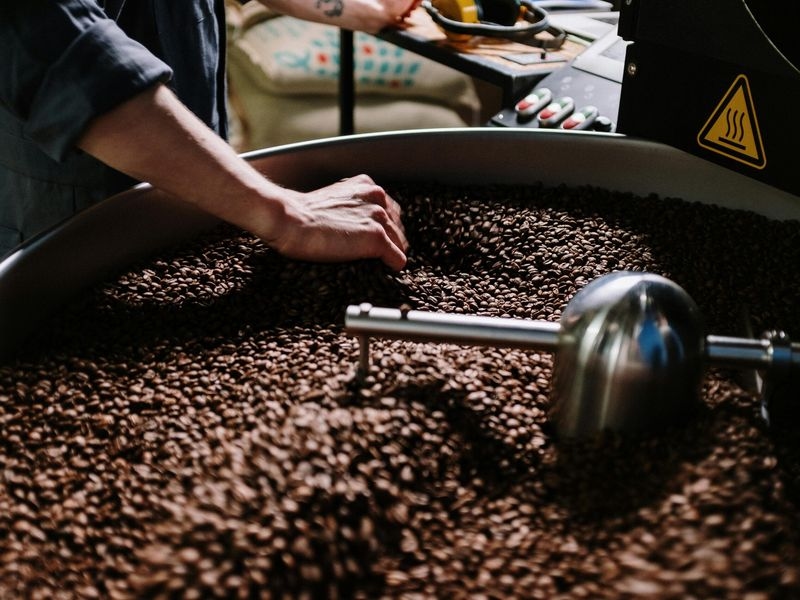
Roasted in small batches We roast to a gentle medium. Any darker and the roast would cover the flavours the forest put there.
Each batch is small, so it can be watched closely and packed fresh.
08 08 · The brew
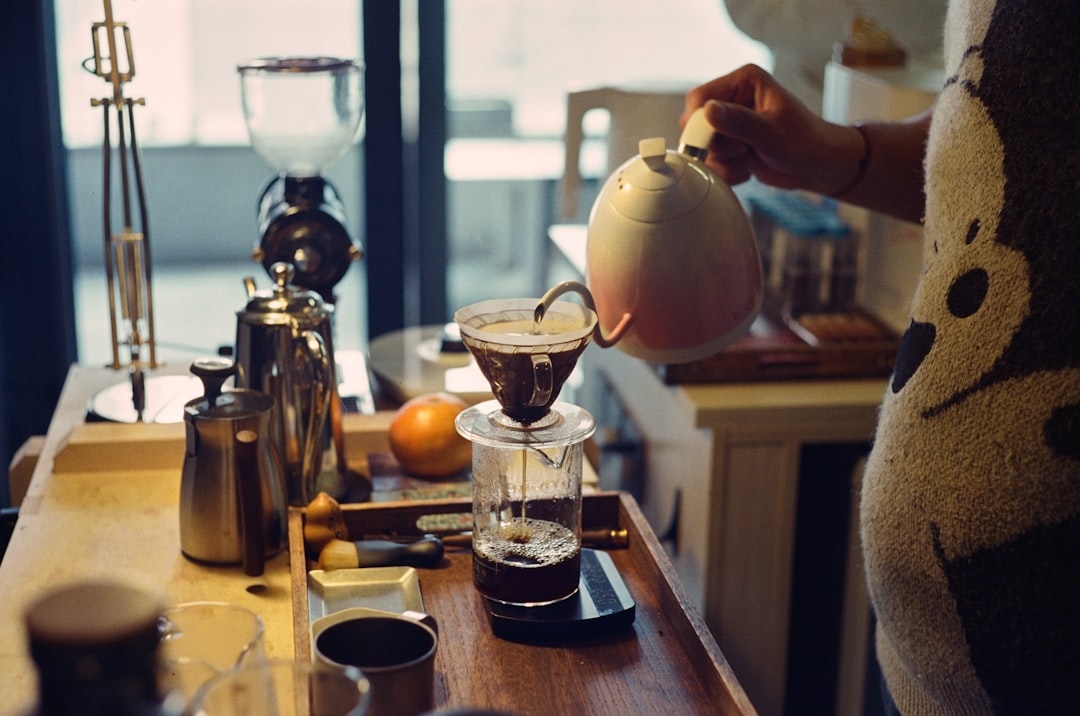
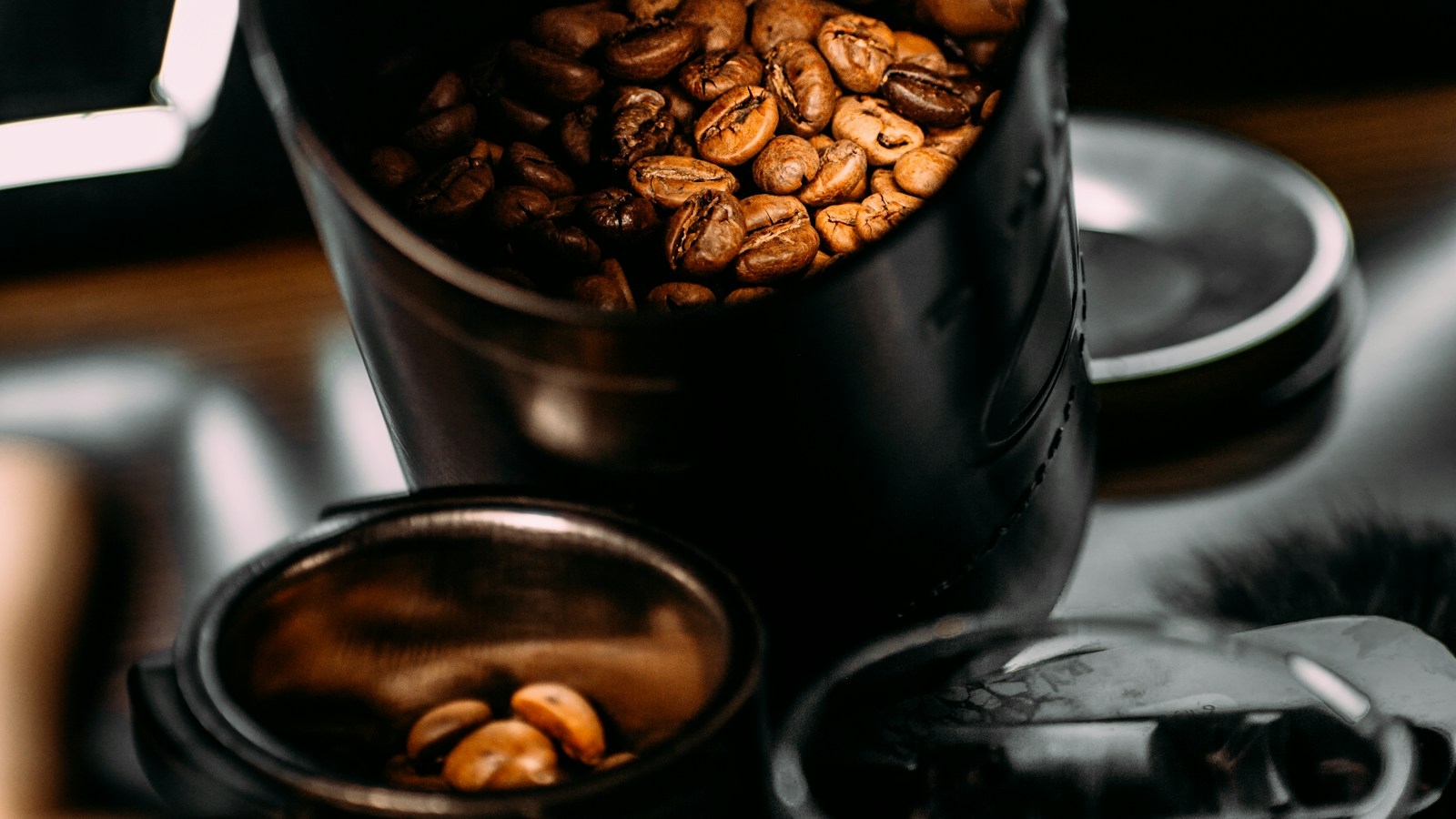
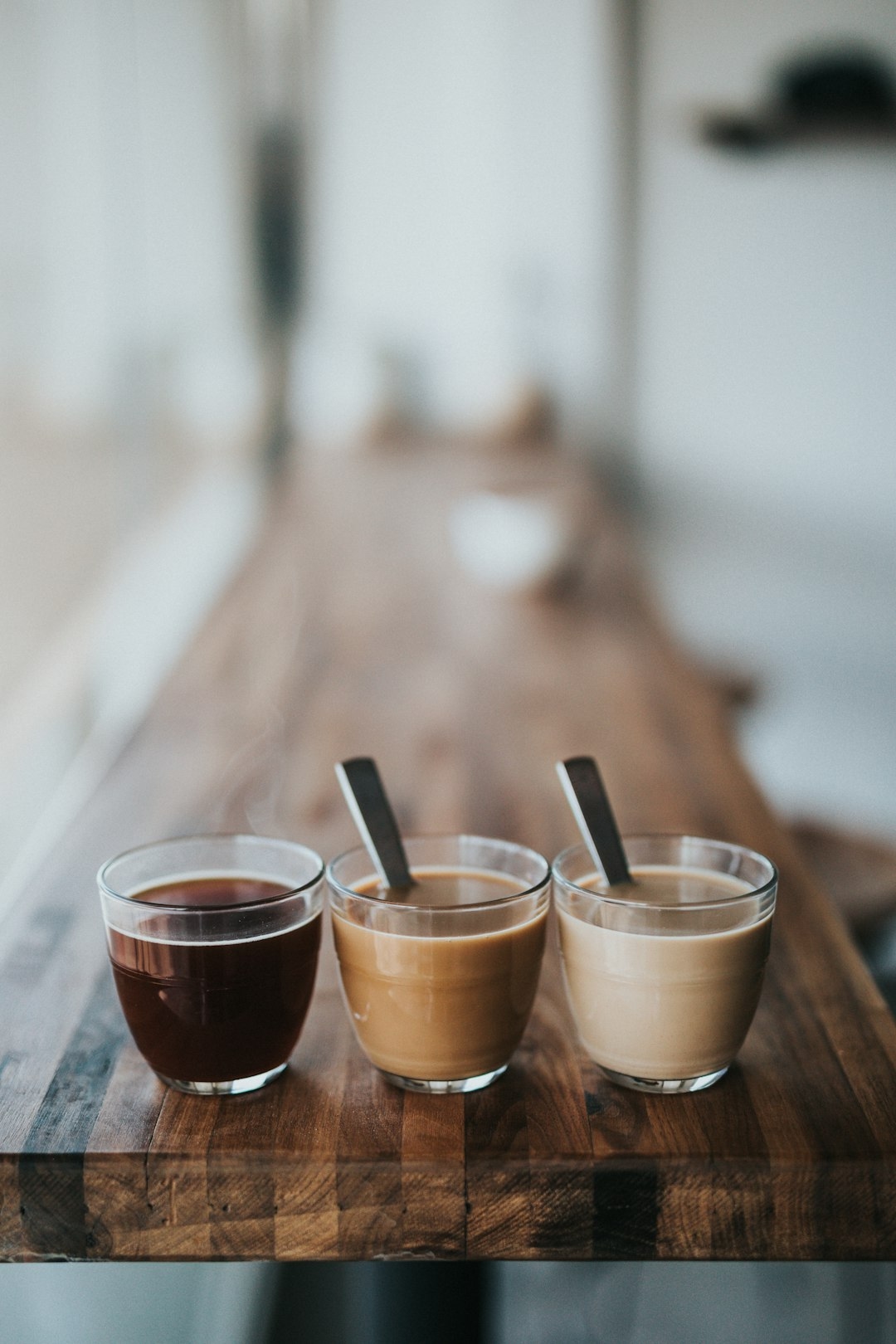
Made slowly, at home Grind it just before brewing. Use water just off the boil and give it a few minutes.
A pour-over, French press or espresso all work. The coffee does not need milk or sugar, but it is your cup.
09 09 · The taste
Smooth, earthy, unforgettable What you notice first is what is missing: bitterness. The cup is full-bodied and soft, with a long, sweet finish.
Caramel Sweet and rounded Dark chocolate Rich, velvety body Earthy A gentle forest depth Low acidity Soft on the palate “ It takes a forest, a wild animal and many careful hands to make one cup of Kopi Luwak.
Choose your size